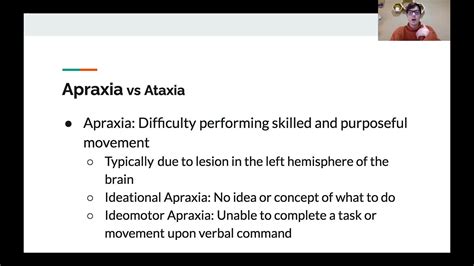
Apraxia and ataxia are two neurological disorders that affect movement and coordination, but they have distinct differences in terms of their underlying causes, symptoms, and effects on daily life. Understanding these differences is crucial for accurate diagnosis, effective treatment, and improved quality of life for individuals affected by these conditions. In this article, we will delve into the complexities of apraxia and ataxia, exploring their definitions, characteristics, and implications for individuals and healthcare professionals.
Apraxia is a neurological disorder characterized by difficulty in planning and executing voluntary movements, despite having the physical ability and desire to perform them. It is often described as a "disconnection" between the brain's intention to move and the actual movement itself. Apraxia can affect various aspects of movement, including speech, swallowing, and limb movements. The symptoms of apraxia can range from mild to severe and may include difficulty with articulation, phonation, and prosody in speech; difficulty with swallowing and managing food and liquids; and difficulty with coordinating and sequencing limb movements.
Key Points
- Apraxia is a neurological disorder affecting movement planning and execution
- Ataxia is a neurological disorder affecting movement coordination and balance
- Apraxia and ataxia have distinct differences in terms of underlying causes, symptoms, and effects on daily life
- Accurate diagnosis and treatment are crucial for improving quality of life for individuals with apraxia and ataxia
- Healthcare professionals should be aware of the complexities and nuances of these conditions to provide effective care
Apraxia vs Ataxia: Understanding the Differences
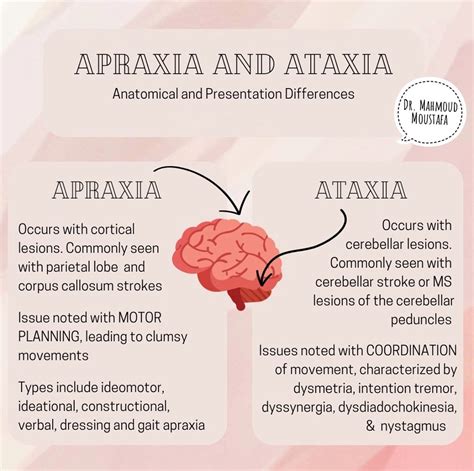
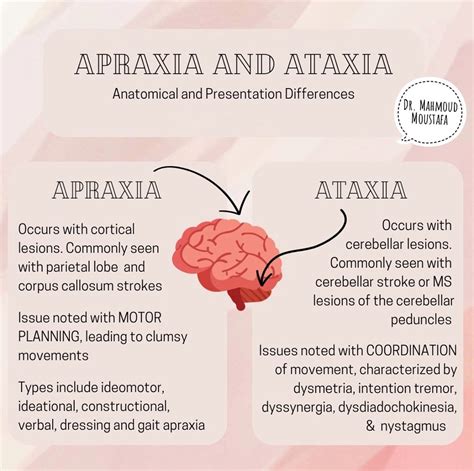
Ataxia, on the other hand, is a neurological disorder characterized by a lack of coordination and balance, resulting in unsteady and clumsy movements. Ataxia can affect various aspects of movement, including walking, balance, and fine motor skills. The symptoms of ataxia can range from mild to severe and may include difficulty with walking and balance; difficulty with coordination and dexterity; and difficulty with speech and swallowing.
Causes and Risk Factors
Apraxia and ataxia have different underlying causes and risk factors. Apraxia is often caused by damage to the brain, such as stroke, traumatic brain injury, or neurodegenerative diseases like Alzheimer’s or Parkinson’s. Ataxia, on the other hand, can be caused by a variety of factors, including genetic disorders, infections, and injuries to the cerebellum or its connections. Additionally, ataxia can be a symptom of various underlying conditions, such as multiple sclerosis, spinocerebellar ataxia, and Friedreich’s ataxia.
| Condition | Cause | Symptoms |
|---|---|---|
| Apraxia | Brain damage, stroke, traumatic brain injury, neurodegenerative diseases | Difficulty with movement planning and execution, speech, swallowing, and limb movements |
| Ataxia | Genetic disorders, infections, injuries to the cerebellum, multiple sclerosis, spinocerebellar ataxia, Friedreich's ataxia | Lack of coordination and balance, unsteady and clumsy movements, difficulty with walking, balance, and fine motor skills |
Diagnosis and Treatment
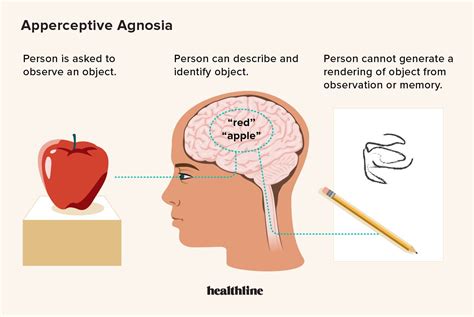
Diagnosing apraxia and ataxia requires a comprehensive evaluation by a healthcare professional, including a physical examination, medical history, and diagnostic tests such as imaging studies and electrophysiological tests. Treatment for apraxia and ataxia depends on the underlying cause and severity of the condition. For apraxia, treatment may include speech therapy, occupational therapy, and physical therapy to improve movement planning and execution. For ataxia, treatment may include physical therapy, occupational therapy, and medication to improve coordination and balance.
Management and Rehabilitation
Management and rehabilitation for apraxia and ataxia require a multidisciplinary approach, involving healthcare professionals from various fields, including neurology, physical therapy, occupational therapy, and speech-language pathology. The goal of rehabilitation is to improve functional abilities, enhance quality of life, and promote independence. This can be achieved through a combination of therapies, including physical therapy to improve mobility and balance, occupational therapy to improve daily living skills, and speech therapy to improve communication.
What is the difference between apraxia and ataxia?
+Apraxia is a neurological disorder affecting movement planning and execution, while ataxia is a neurological disorder affecting movement coordination and balance.
What are the causes and risk factors for apraxia and ataxia?
+Apraxia is often caused by brain damage, stroke, traumatic brain injury, or neurodegenerative diseases, while ataxia can be caused by genetic disorders, infections, injuries to the cerebellum, and various underlying conditions.
How are apraxia and ataxia diagnosed and treated?
+Diagnosis requires a comprehensive evaluation by a healthcare professional, including physical examination, medical history, and diagnostic tests. Treatment depends on the underlying cause and severity of the condition and may include speech therapy, occupational therapy, physical therapy, and medication.
In conclusion, apraxia and ataxia are distinct neurological disorders that affect movement and coordination, with different underlying causes, symptoms, and effects on daily life. Understanding these differences is crucial for accurate diagnosis, effective treatment, and improved quality of life for individuals affected by these conditions. By recognizing the complexities and nuances of apraxia and ataxia, healthcare professionals can provide comprehensive care and support to individuals with these conditions, promoting independence, enhancing functional abilities, and improving overall well-being.