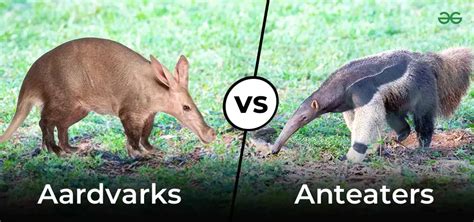
The fascinating world of unique and intriguing creatures is filled with animals that have adapted to their environments in remarkable ways. Among these, the anteater and the aardvark stand out due to their distinctive physical characteristics and specialized feeding habits. While both are often confused with one another due to their similar appearances and dietary preferences, they belong to different taxonomic groups and exhibit a range of differences. This article aims to delve into the comparative analysis of anteaters and aardvarks, exploring their physical attributes, habitats, diets, and behaviors to understand what sets these animals apart.
Key Points
- Anteaters and aardvarks are distinct species with different physical characteristics and habitats.
- Both are primarily insectivorous, but they have unique adaptations for eating ants and termites.
- Aardvarks are nocturnal and solitary, while anteaters can be diurnal or nocturnal and sometimes live in small family groups.
- Anteaters have a more varied diet that can include fruit and small vertebrates, in addition to insects.
- Conservation efforts are necessary for both species due to habitat loss and human persecution.
Physical Characteristics and Taxonomy
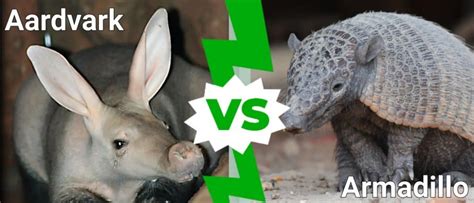
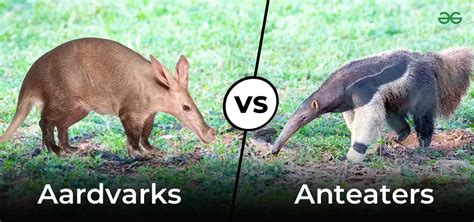
One of the most immediate ways to distinguish anteaters from aardvarks is by their physical appearance. Anteaters, belonging to the order Pilosa and family Myrmecophagidae, are characterized by their long, pointed snout, powerful front legs equipped with large claws, and a distinctive, elongated tongue covered in sticky mucus. This unique tongue can extend up to 2 feet (60 cm) in the giant anteater, allowing for efficient gathering of ants and termites. Anteaters also have a thick, woolly fur that can range in color from white to brown, depending on the species.
In contrast, aardvarks, which are part of the order Tubulidentata and the family Orycteropodidae, have a more robust body, a longer, more pointed snout than anteaters, powerful legs, and sharp claws. Their fur is thicker and more coarse than that of anteaters, often appearing brown or gray. Aardvarks also possess a long, sticky tongue, although it is not as long as that of anteaters, which they use to feed on termites and ants. The aardvark's tongue is covered in saliva that helps to trap insects, and its powerful claws are used for breaking open termite mounds.
Habitat and Distribution
Anteaters are found in Central and South America, ranging from Mexico to Argentina, and inhabit a variety of environments, including forests, grasslands, and wetlands. Their adaptability to different habitats is partly due to their ability to dig burrows, which provide shelter and protection from predators. Aardvarks, on the other hand, are exclusively African, with their range covering sub-Saharan regions. They prefer open grasslands and savannas, where termite mounds are abundant. Aardvarks are also skilled diggers, using their burrows not only for shelter but also as a means to escape extreme temperatures and find food.
| Species | Habitat | Geographical Range |
|---|---|---|
| Anteaters | Forests, grasslands, wetlands | Central and South America |
| Aardvarks | Grasslands, savannas | Sub-Saharan Africa |
Diet and Feeding Habits
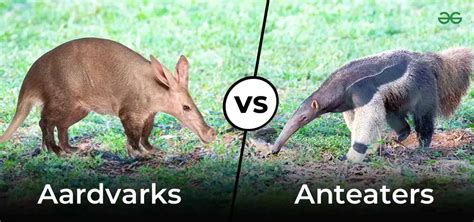
Both anteaters and aardvarks are primarily insectivorous, with a diet that consists mainly of ants and termites. However, anteaters have a slightly more varied diet; they can consume fruit and even small vertebrates on occasion, although insects remain their staple food source. The giant anteater, for example, can eat up to 35,000 ants in a single day, showcasing their remarkable feeding capacity. Aardvarks, while also feeding on ants, have a stronger preference for termites, which they gather using their long tongues and powerful claws to break into termite mounds.
The feeding habits of these animals are closely linked to their habitats and the availability of food. Anteaters, with their more varied diet and ability to live in different environments, have a certain level of adaptability that aardvarks do not. Aardvarks, being more specialized in their diet and habitat preferences, are highly dependent on the presence of termite mounds in their area.
Behavior and Social Structure
Aardvarks are nocturnal and generally solitary animals, only coming together for mating. Their solitary nature is likely due to the territorial requirements for finding sufficient food sources. Anteaters, while also primarily solitary, can sometimes be found in small family groups, especially females with their young. Anteaters can be either diurnal or nocturnal, depending on the species and environmental factors such as temperature and humidity.
The social behavior of these animals reflects their unique adaptations to their environments. The solitary nature of aardvarks, for instance, may be an adaptation to reduce competition for food, given the specificity of their diet. Anteaters, with their slightly more flexible social structure, may benefit from occasional grouping for protection or foraging efficiency.
What are the primary differences between anteaters and aardvarks?
+The primary differences lie in their physical characteristics, habitats, and diets. Anteaters have a longer, more pointed snout and a tongue that can extend further than that of aardvarks. They also inhabit a wider range of environments and have a slightly more varied diet.
Are anteaters and aardvarks endangered?
+Both anteaters and aardvarks face threats such as habitat loss and fragmentation, as well as persecution by humans. However, their conservation status varies by species. The giant anteater, for example, is listed as Vulnerable on the IUCN Red List, while the aardvark is currently listed as Least Concern, though its population is declining in some areas.
Can anteaters and aardvarks be found in the same habitat?
+No, anteaters and aardvarks do not share the same geographical range. Anteaters are found in Central and South America, while aardvarks are exclusively African. Therefore, they do not cohabitate in the same habitats.
In conclusion, while anteaters and aardvarks share some similarities, particularly in their diet and unique feeding adaptations, they are distinct species with different physical characteristics, habitats, and behaviors. Understanding these differences is not only fascinating from a biological standpoint but also crucial for conservation efforts aimed at protecting these incredible creatures and their habitats. As we continue to learn more about anteaters and aardvarks, we are reminded of the importance of preserving biodiversity and the natural habitats that support such a wide range of life on Earth.