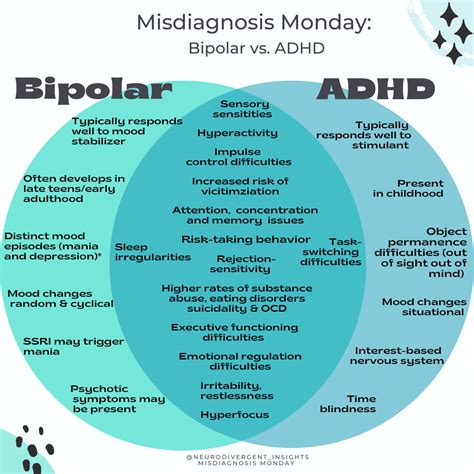
Attention Deficit Hyperactivity Disorder (ADHD) and Bipolar Disorder are two distinct mental health conditions that often present with overlapping symptoms, making diagnosis and treatment challenging. Despite their differences, both conditions can significantly impact an individual's quality of life, relationships, and overall well-being. In this article, we will delve into the differences between ADHD and Bipolar Disorder, exploring their unique characteristics, diagnostic criteria, and treatment approaches.
Key Points
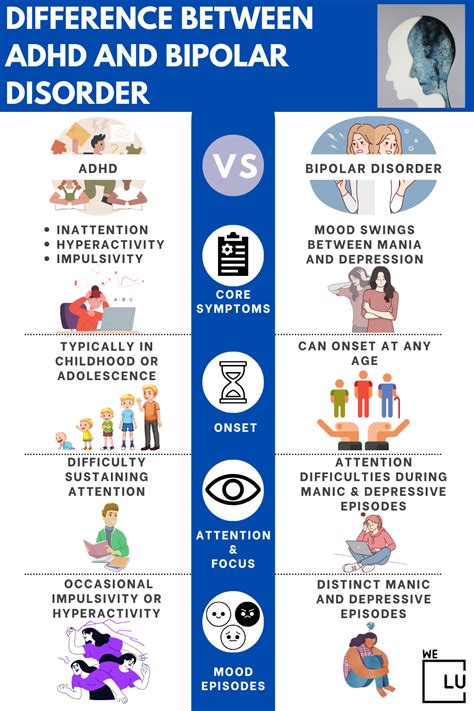
- ADHD is characterized by symptoms of inattention, hyperactivity, and impulsivity, whereas Bipolar Disorder is marked by mood swings, ranging from manic highs to depressive lows.
- The diagnostic criteria for ADHD and Bipolar Disorder differ, with ADHD requiring a persistent pattern of inattention and/or hyperactivity-impulsivity, and Bipolar Disorder requiring a history of manic or hypomanic episodes.
- Treatment approaches for ADHD and Bipolar Disorder vary, with ADHD often managed with stimulant medications and behavioral therapies, and Bipolar Disorder typically treated with mood stabilizers and psychotherapy.
- Co-occurring conditions, such as anxiety or substance use disorders, can complicate diagnosis and treatment, highlighting the need for comprehensive and individualized care.
- Accurate diagnosis and treatment of ADHD and Bipolar Disorder require a thorough understanding of their differences and similarities, as well as a collaborative approach between healthcare professionals, patients, and families.
ADHD: Characteristics and Diagnostic Criteria

ADHD is a neurodevelopmental disorder that affects both children and adults, with symptoms typically persisting into adulthood. The diagnostic criteria for ADHD, as outlined in the Diagnostic and Statistical Manual of Mental Disorders, 5th Edition (DSM-5), include a persistent pattern of inattention and/or hyperactivity-impulsivity, with symptoms occurring in two or more settings, such as home, school, or work. ADHD symptoms can be divided into three subtypes: predominantly inattentive type, predominantly hyperactive-impulsive type, and combined type.
ADHD Subtypes and Symptoms
The predominantly inattentive type of ADHD is characterized by symptoms such as difficulty sustaining focus, following instructions, and completing tasks. In contrast, the predominantly hyperactive-impulsive type is marked by symptoms of fidgeting, restlessness, and impulsivity. The combined type, which is the most common subtype, presents with a combination of inattentive and hyperactive-impulsive symptoms. Accurate diagnosis of ADHD requires a comprehensive evaluation, including a physical examination, psychological assessment, and behavioral observations.
| ADHD Subtype | Characteristics |
|---|---|
| Predominantly Inattentive Type | Difficulty sustaining focus, following instructions, and completing tasks |
| Predominantly Hyperactive-Impulsive Type | Fidgeting, restlessness, and impulsivity |
| Combined Type | Combination of inattentive and hyperactive-impulsive symptoms |
Bipolar Disorder: Characteristics and Diagnostic Criteria
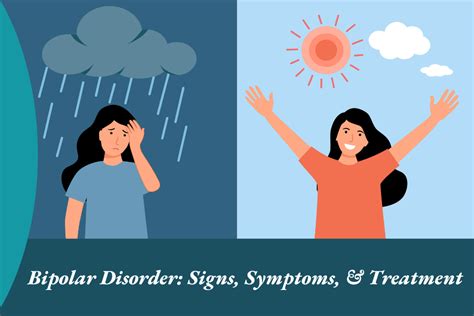
Bipolar Disorder, formerly known as manic-depressive illness, is a mood disorder characterized by periods of extreme mood swings, ranging from manic highs to depressive lows. The diagnostic criteria for Bipolar Disorder, as outlined in the DSM-5, require a history of manic or hypomanic episodes, which may be accompanied by depressive episodes. Bipolar Disorder can be divided into four subtypes: Bipolar I Disorder, Bipolar II Disorder, Cyclothymic Disorder, and Other Specified Bipolar and Related Disorders.
Bipolar Disorder Subtypes and Symptoms
Bipolar I Disorder is characterized by one or more manic episodes, which may be accompanied by depressive episodes. Bipolar II Disorder is marked by one or more major depressive episodes and at least one hypomanic episode. Cyclothymic Disorder is a milder form of Bipolar Disorder, with periods of hypomanic and depressive symptoms lasting at least two years. Accurate diagnosis of Bipolar Disorder requires a comprehensive evaluation, including a thorough medical and psychological history, as well as behavioral observations.
| Bipolar Disorder Subtype | Characteristics |
|---|---|
| Bipolar I Disorder | One or more manic episodes, with or without depressive episodes |
| Bipolar II Disorder | One or more major depressive episodes and at least one hypomanic episode |
| Cyclothymic Disorder | Periods of hypomanic and depressive symptoms lasting at least two years |
Differences between ADHD and Bipolar Disorder
While ADHD and Bipolar Disorder share some similarities, such as impulsivity and mood instability, they are distinct conditions with different diagnostic criteria and treatment approaches. ADHD is primarily characterized by symptoms of inattention, hyperactivity, and impulsivity, whereas Bipolar Disorder is marked by mood swings, ranging from manic highs to depressive lows. Understanding these differences is essential for accurate diagnosis and effective treatment.
Co-occurring Conditions and Treatment Challenges
Co-occurring conditions, such as anxiety or substance use disorders, can complicate diagnosis and treatment of ADHD and Bipolar Disorder. Comorbidities can exacerbate symptoms, reduce treatment efficacy, and increase the risk of suicidal behavior. Healthcare professionals should consider the individual’s overall clinical presentation, including co-occurring conditions, when developing a treatment plan.
What are the primary differences between ADHD and Bipolar Disorder?
+ADHD is primarily characterized by symptoms of inattention, hyperactivity, and impulsivity, whereas Bipolar Disorder is marked by mood swings, ranging from manic highs to depressive lows.
How are ADHD and Bipolar Disorder diagnosed?
+Diagnosis of ADHD and Bipolar Disorder requires a comprehensive evaluation, including a thorough medical and psychological history, behavioral observations, and diagnostic criteria outlined in the DSM-5.
What are the treatment approaches for ADHD and Bipolar Disorder?
+Treatment approaches for ADHD and Bipolar Disorder vary, with ADHD often managed with stimulant medications and behavioral therapies, and Bipolar Disorder typically treated with mood stabilizers and psychotherapy.
In conclusion, ADHD and Bipolar Disorder are distinct mental health conditions that require accurate diagnosis and effective treatment. Understanding the differences between these conditions, including their characteristics, diagnostic criteria, and treatment approaches, is essential for healthcare professionals, patients, and families. By working together, we can improve diagnosis, treatment, and outcomes for individuals with ADHD and Bipolar Disorder, ultimately enhancing their quality of life and overall well-being.
Meta Description: Discover the differences between ADHD and Bipolar Disorder, including their characteristics, diagnostic criteria, and treatment approaches. Learn how to accurately diagnose and effectively manage these conditions. (140 characters)