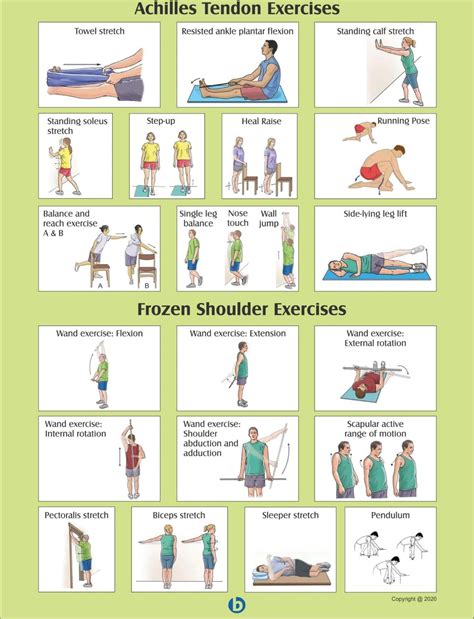
Achilles tendonitis is a common condition that affects the Achilles tendon, which connects the calf muscles to the heel bone. It is characterized by pain, swelling, and stiffness in the affected area, making it challenging to perform daily activities, let alone engage in sports or exercise. However, with a well-structured rehabilitation program, individuals can alleviate symptoms, promote healing, and prevent future occurrences. A crucial component of this program is a series of carefully designed Achilles tendonitis exercises, which aim to strengthen the surrounding muscles, improve flexibility, and enhance tendon health.
Key Points
- Achilles tendonitis exercises should be tailored to the individual's specific condition and fitness level.
- Strengthening the calf muscles is essential for supporting the Achilles tendon and promoting recovery.
- Flexibility and stretching exercises can help reduce tension in the tendon and surrounding tissues.
- Progressive loading and eccentric exercises are effective in promoting tendon repair and strengthening.
- It is crucial to listen to the body and avoid exacerbating the condition by overexerting or ignoring pain.
Understanding Achilles Tendonitis
Achilles tendonitis can be classified into two main categories: insertional and non-insertional. Insertional tendonitis affects the lower part of the tendon, where it attaches to the heel bone, while non-insertional tendonitis affects the middle part of the tendon. Understanding the specific type and severity of the condition is vital for developing an effective treatment plan. Consultation with a healthcare professional or physical therapist is recommended to determine the most appropriate exercises and rehabilitation strategy.
Initial Phase: Pain Reduction and Protection
In the initial phase of rehabilitation, the primary focus is on reducing pain and inflammation, protecting the tendon, and promoting healing. This can be achieved through a combination of rest, ice, compression, and elevation (RICE), as well as the use of anti-inflammatory medications or orthotics. Gentle exercises such as ankle mobilization and toe curls can help maintain range of motion without exacerbating the condition.
| Exercise | Description |
|---|---|
| Ankle Mobilization | Gently move the ankle through its range of motion, focusing on dorsiflexion and plantarflexion. |
| Toe Curls | Curl the toes under and then release, repeating the motion for several repetitions. |
Strengthening Exercises
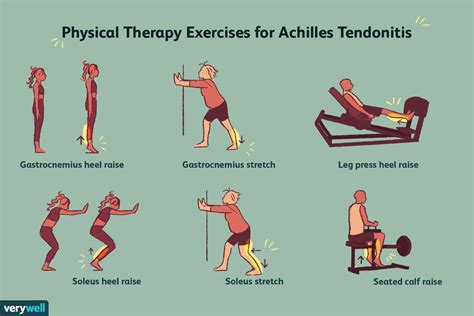
As the condition improves, and pain decreases, strengthening exercises can be introduced to target the calf muscles and other surrounding tissues. These exercises are crucial for providing support to the Achilles tendon and enhancing its resilience to future injuries. Calf raises, both with bodyweight and resistance, are effective for strengthening the gastrocnemius and soleus muscles.
Progressive Loading and Eccentric Exercises
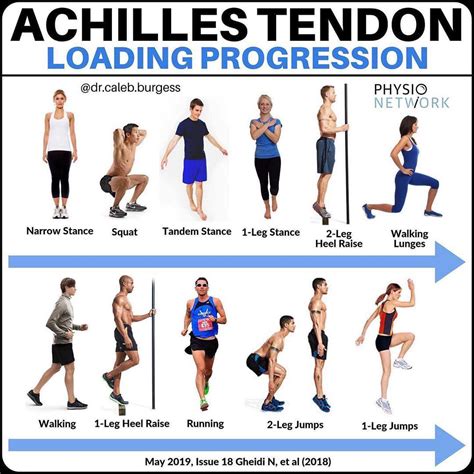
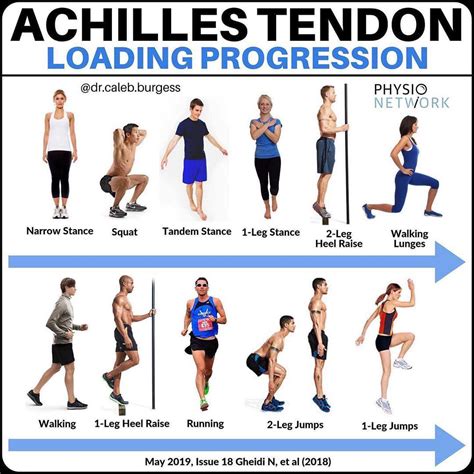
Progressive loading involves gradually increasing the intensity of exercises over time, which is vital for the strengthening and repair of the Achilles tendon. Eccentric exercises, in particular, have been shown to be highly effective in the treatment of Achilles tendonitis. These exercises involve lengthening the muscle under load, which helps in promoting tendon repair and strengthening. Examples include eccentric calf raises and single-leg heel raises.
Eccentric calf raises can be performed on a step or curb, slowly lowering the heel below the level of the step, then pushing back up to the starting position. Single-leg heel raises require standing on one leg and raising up onto the toes, then slowly lowering back down. These exercises should be performed with control and precision, avoiding any movements that cause sharp pain or discomfort.
Flexibility and Stretching
In addition to strengthening, flexibility and stretching exercises are critical for reducing tension in the Achilles tendon and surrounding tissues. Regular stretching can help improve range of motion, reduce stiffness, and alleviate pain. The calf stretch and Achilles tendon stretch are particularly beneficial, targeting the gastrocnemius, soleus, and the Achilles tendon itself.
| Stretch | Description |
|---|---|
| Calf Stretch | Stand facing a wall with one hand on the wall for balance. Step one foot back about a foot, keeping the heel on the ground. Slowly bend the front knee, keeping the back leg straight, until a stretch is felt in the calf. Hold for 15-30 seconds and repeat on the other side. |
| Achilles Tendon Stretch | Stand with the affected leg in front of the other leg, with the heel on the ground. Bend the front knee, keeping the back leg straight, until a stretch is felt in the Achilles tendon. Hold for 15-30 seconds and repeat several times. |
Functional and Sports-Specific Exercises
As rehabilitation progresses, and strength and flexibility improve, functional and sports-specific exercises can be introduced to prepare the individual for return to activity. These exercises mimic the movements and stresses of the specific sport or activity, helping to ensure a safe and successful return to play. Examples include agility drills, jumping exercises, and running or cycling, depending on the individual’s specific needs and goals.
What are the first signs of Achilles tendonitis, and how can it be diagnosed?
+The first signs of Achilles tendonitis often include pain and stiffness in the Achilles tendon, which can worsen with activity. Diagnosis is typically made through a combination of physical examination, medical history, and sometimes imaging tests like ultrasound or MRI to confirm the extent of the injury.
Can Achilles tendonitis be prevented, and what role do exercises play in prevention?
+While not all cases can be prevented, regular exercises that strengthen the calf muscles and improve flexibility can significantly reduce the risk of developing Achilles tendonitis. Incorporating gradual increases in activity level, proper warm-up routines, and cool-down stretches can also help in preventing overuse injuries.
How long does it take to recover from Achilles tendonitis, and what factors influence recovery time?
+Recovery time from Achilles tendonitis can vary significantly depending on the severity of the condition, the effectiveness of the treatment plan, and the individual's overall health and adherence to rehabilitation exercises. Mild cases may recover within a few weeks, while more severe cases can take several months to a year or more to fully recover.
In conclusion, Achilles tendonitis exercises play a pivotal role in the rehabilitation and prevention of this common condition. By understanding the condition, progressing through a structured rehabilitation program, and incorporating strengthening, flexibility, and functional exercises, individuals can effectively manage symptoms, promote healing, and reduce the risk of future injury. It’s crucial to approach these exercises with patience, listening to the body and avoiding overexertion, to ensure a successful and sustainable recovery.