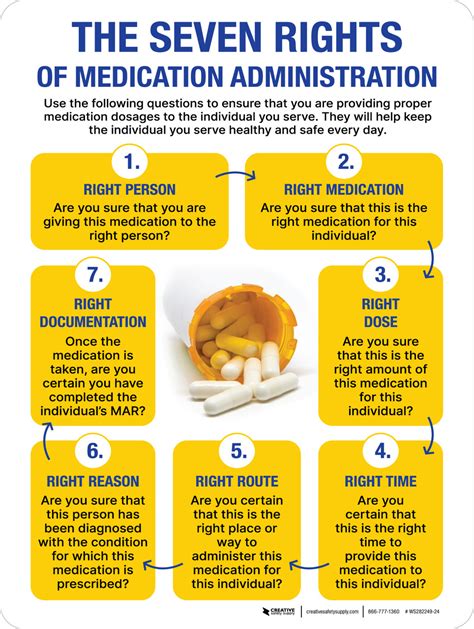
The administration of medication is a critical aspect of healthcare, requiring meticulous attention to detail to ensure patient safety and effective treatment outcomes. At the heart of this process lies the concept of the 7 Rights of Medication, a fundamental principle guiding healthcare professionals in the safe and accurate administration of medications. These rights are designed to minimize errors and maximize the therapeutic benefits of medications, thereby safeguarding patient well-being.
Understanding the 7 Rights of Medication
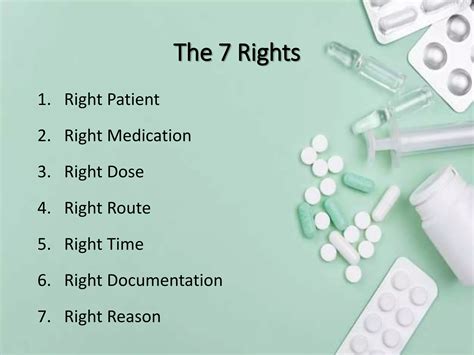
The 7 Rights of Medication are a cornerstone of nursing and medical practice, serving as a checklist to verify that the correct medication is administered to the right patient, in the right dose, at the right time, via the right route, with the right documentation, and with the right response. This comprehensive approach encompasses every aspect of medication administration, from the initial prescription to the patient’s response to the medication.
The Right Patient
Ensuring that the medication is administered to the right patient is the first and most critical right. This involves verifying the patient’s identity through at least two identifiers, such as their name and date of birth, to prevent mix-ups. The use of barcode scanning technology and electronic health records (EHRs) has significantly enhanced patient identification accuracy, reducing the risk of medication errors.
The Right Medication
The second right involves verifying that the correct medication is being administered. This includes checking the medication’s name, strength, and form against the prescription or medication order. Healthcare professionals must be vigilant for look-alike and sound-alike medications, which can be particularly challenging due to similarities in packaging or names.
The Right Dose
The right dose is critical for achieving the desired therapeutic effect while minimizing potential side effects. Healthcare professionals must carefully calculate the dose based on the patient’s weight, age, and other relevant factors, ensuring that it aligns with the prescribed amount and does not exceed safe limits.
The Right Time
Administering medication at the right time is essential for maintaining therapeutic drug levels and preventing adverse effects. This may involve synchronizing medication administration with meals, sleep patterns, or other daily routines to optimize absorption and minimize side effects.
The Right Route
The route of administration (e.g., oral, intravenous, topical) significantly affects how the medication is absorbed and distributed within the body. Selecting the right route is crucial for ensuring the medication’s efficacy and safety, as different routes can have varying effects on the body.
The Right Documentation
Accurate and timely documentation of medication administration is vital for maintaining a comprehensive record of the patient’s treatment. This includes recording the medication’s name, dose, time of administration, and any observations or reactions, which helps in monitoring the patient’s response and making informed decisions about future care.
The Right Response
The final right involves monitoring the patient’s response to the medication, which includes observing for both therapeutic effects and potential side effects. This continuous assessment enables healthcare professionals to adjust the treatment plan as needed, ensuring that the medication regimen remains safe and effective.
| Right | Description |
|---|---|
| Right Patient | Verify patient identity |
| Right Medication | Correct medication and strength |
| Right Dose | Accurate calculation of dose |
| Right Time | Administration at the correct time |
| Right Route | Appropriate route of administration |
| Right Documentation | Accurate recording of administration |
| Right Response | Monitoring patient's response |
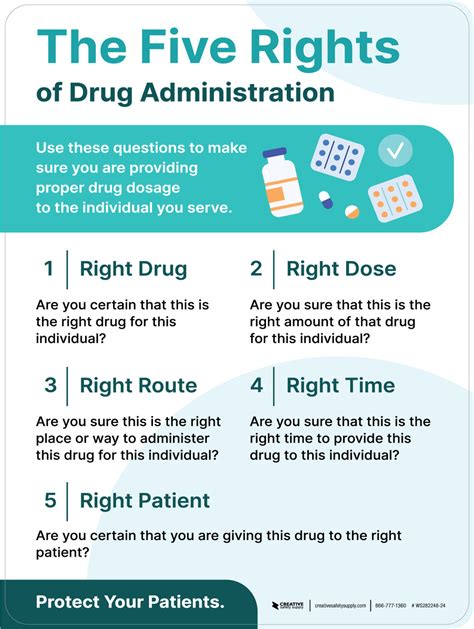
Key Points
- The 7 Rights of Medication are a fundamental principle in healthcare aimed at ensuring the safe administration of medications.
- These rights include the right patient, right medication, right dose, right time, right route, right documentation, and right response.
- Accurate patient identification and medication verification are crucial for preventing errors.
- Continuous monitoring of the patient's response to medication is essential for adjusting the treatment plan and ensuring safety.
- Implementing the 7 Rights of Medication requires a combination of technical knowledge, critical thinking, and attention to detail.
The application of the 7 Rights of Medication in clinical practice underscores the commitment to patient safety and the provision of high-quality care. By integrating these principles into daily practice, healthcare professionals can minimize risks, optimize treatment outcomes, and foster a culture of safety within healthcare settings.
What is the primary goal of the 7 Rights of Medication?
+The primary goal is to ensure the safe and accurate administration of medications, thereby safeguarding patient well-being and optimizing treatment outcomes.
How can technology support the implementation of the 7 Rights of Medication?
+Technology, such as barcode scanning, electronic health records, and automated dispensing systems, can significantly enhance the accuracy of medication administration by reducing human error and improving documentation.
What role does continuous education play in maintaining competency in the 7 Rights of Medication?
+Continuous education is essential for healthcare professionals to stay updated on the latest medications, administration techniques, and safety protocols, thereby ensuring their competency in applying the 7 Rights of Medication effectively.
In conclusion, the 7 Rights of Medication serve as a foundational framework for ensuring the safe and effective administration of medications. By understanding and meticulously applying these rights, healthcare professionals can play a critical role in safeguarding patient safety, optimizing treatment outcomes, and upholding the highest standards of care.